

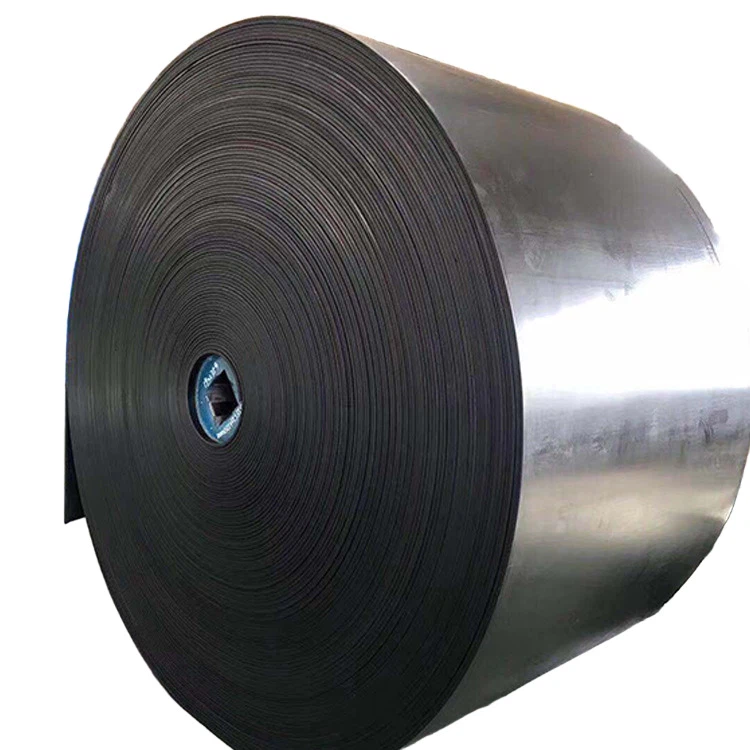

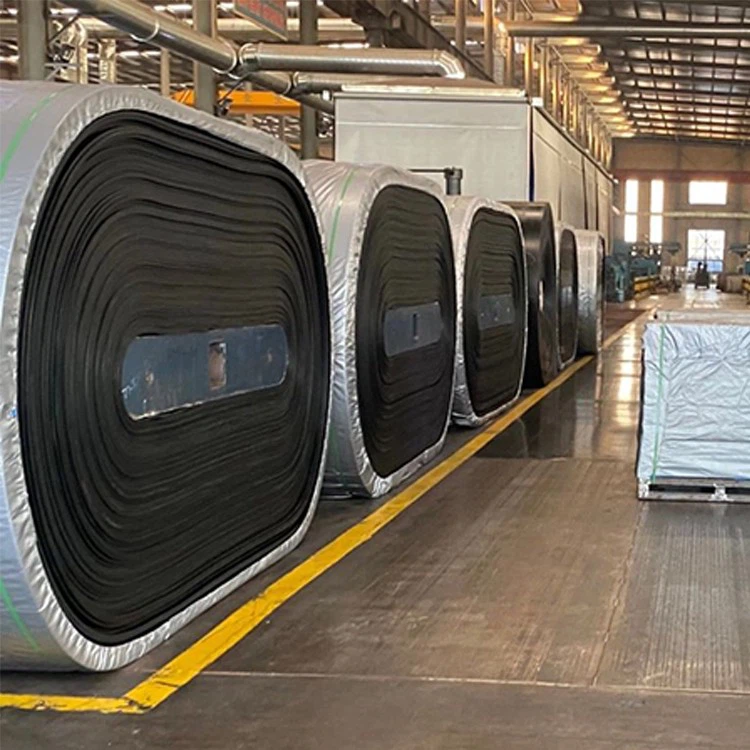


Product Description
EP in conveyor belts stands for "Polyester-Nylon," which refers to the type of fabric used in the construction of the belt. This fabric is composed of polyester fibers in the warp (longitudinal) direction and nylon fibers in the weft (transverse) direction, combining to create a robust material that optimizes performance in demanding environments.
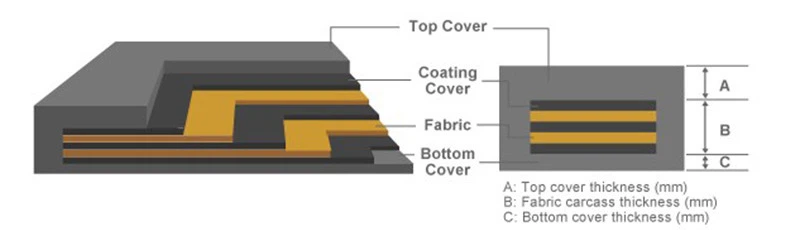
Representation Method of EP Conveyor Belt
Materials:
EP conveyor belts are made from synthetic materials:
- Polyester (E): Used in the longitudinal direction (warp).
- Nylon (P): Used in the transverse direction (weft).
Number of Plies:
This indicates the number of layers of fabric within the belt. Common configurations include 2, 3, 4, 5, or more plies.
Belt Strength:
The strength of the belt is represented by the tensile strength, usually measured in N/mm (Newtons per millimeter). It's the maximum force the belt can withstand without breaking. Typical strengths are EP 100, EP 150, EP 200, EP 300, EP 400, EP 500, and so on, where the number represents the belt's tensile strength in N/mm.
Belt Thickness:
The overall thickness of the belt, which includes the fabric and rubber covers, is specified. This is usually measured in millimeters (mm).
Belt Width:
The width of the belt is given in millimeters (mm) or inches.
Cover Thickness:
The thickness of the top and bottom rubber covers is also specified separately. This is important for applications where wear and tear are significant factors.
Cover Grade:
The type of rubber used for the covers, which determines the belt's resistance to various conditions like abrasion, heat, oil, and chemicals. Common grades include M (General purpose), N (Abrasion resistant), HR (Heat resistant), OR (Oil resistant), and FR (Flame resistant).
Temperature Range:
The range of temperatures the belt can operate within without degradation of its properties.
Example Representation:
For an EP conveyor belt with the following characteristics:
- 3 plies
- EP 200 tensile strength
- 12mm overall thickness
- 800mm width 800 mm
- 5mm top cover, 3mm bottom cover
- M grade rubber
The representation would be: EP 200*3P B800 mm x 12 mm (5+3) M
By detailing the materials, number of plies, belt strength, dimensions, cover thickness, cover grade, elongation, and temperature range, we can present an accurate quote for the belt to ensure it meets application requirements.
Parameters
|
Fabric Type |
Fabric code |
Ply thickness (mm/P) |
No.of fabric plies |
Cover thickness (mm) |
Width (mm) |
Length (mm) |
|
|
Top |
Bottom |
||||||
|
EP |
EP100 |
1.0 |
2-10 |
2-12 |
0-5 |
350-2000 |
10-400 |
|
EP125 |
1.0 |
||||||
|
EP150 |
1.1 |
||||||
|
EP200 |
1.2 |
||||||
|
EP250 |
1.4 |
||||||
|
EP300 |
1.6 |
2-6 |
|||||
|
EP350 |
1.7 |
||||||
|
EP400 |
1.8 |
||||||
|
EP500 |
2.1 |
||||||
Advantages of EP Over Other Materials Like NN (Nylon-Nylon)
Compared to NN belts, which are made entirely from nylon, EP belts offer distinct advantages that can be crucial for specific industrial applications:
Dimensional Stability Under Tension: Polyester's inherent strength offers greater stability, which is essential in high-tension applications.
Strength-to-Weight Ratio: EP belts are lighter yet stronger, which makes them easier to handle and reduces operational strain.
Energy Efficiency: The reduced weight and better mechanical properties help lower the energy required to operate conveyor systems.
UV and Heat Resistance: Polyester withstands UV rays and heat better than nylon, which can degrade under these conditions.
Moisture Absorption: EP belts absorb less moisture than NN belts, preventing swelling and deformation.
Biological Resistance: They are more resistant to biological threats like mildew, which is critical in humid or wet settings.
Cost Efficiency: Despite potentially higher initial costs, the durability and reduced maintenance of EP belts make them more cost-effective over time.
Manufacturing Flexibility: EP belts can be produced in larger sizes and dimensions, accommodating broader operational needs.
Environmental Versatility: The robust nature of EP belts allows them to function effectively across diverse environments, from dry deserts to humid rainforests.
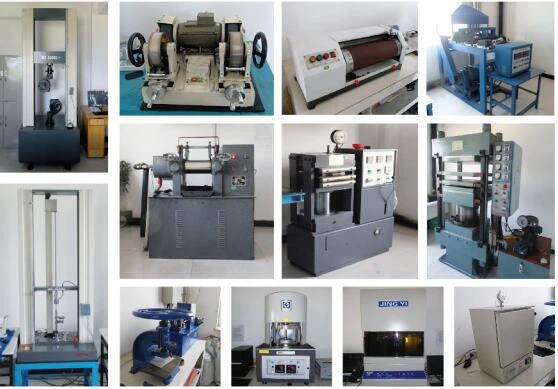
Quality Control

Conveyor Belt Packing

- PVC water-proof cloth, Standard export packing, or as agreed.
- Package core is made of plastic/steel core
- Maximum 500m per roll for rubber EP conveyor belts
- One 20" container can load 5~8 rolls of conveyor belts
- One 40" container can load 8-10 rolls of conveyor belts
Hot Tags: ep conveyor belt, China ep conveyor belt manufacturers, suppliers, ST Conveyor Belt, Cold Resistant Conveyor Belt, oil resistant belt, NN Conveyor Belt, steel cord conveyor belt, cross-rigid belt


