

Conveyor Belt
Your Professional Conveyor Belt Supplier
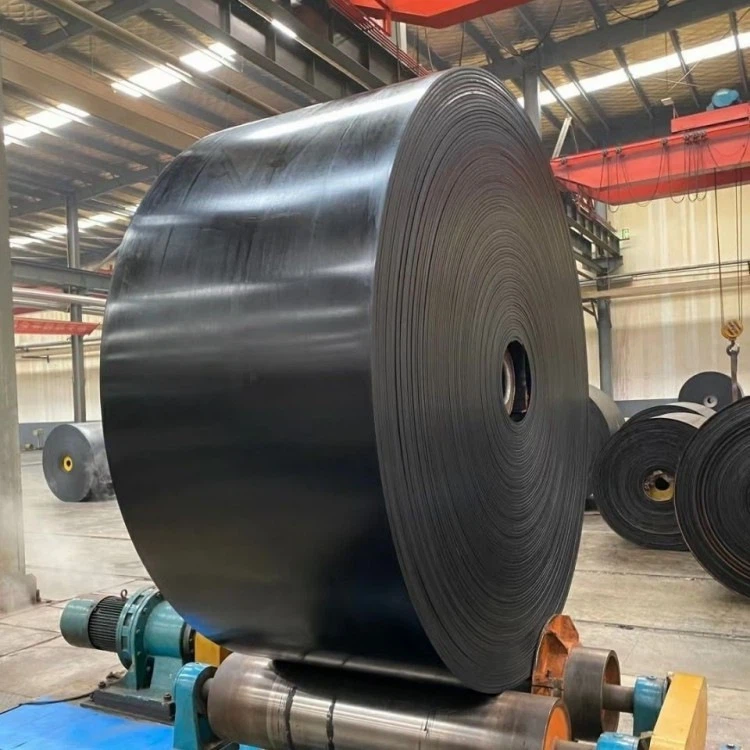
Shanxi YiQi is a professional conveyor components manufacturer and supplier. Our main product lines include conveyor belts, conveyor rollers, pulleys, pulley lagging sheets, skirt rubber, impact beds, conveyor hood covers, and ultra-high molecular weight polyethylene (UHMWPE) sheets. These products are widely used in mining, cement, power generation, steel, ports, and chemical industries.
Quality Control
Shanxi YiQi adheres strictly to ISO quality management systems and implements rigorous inspection protocols throughout every stage of production.
Custom Service
Our experienced technical team provides customized solutions based on the specific operating conditions and requirements of each customer.
End-to-End Service
From product selection and design to installation guidance and after-sales support, Shanxi YiQi offers end-to-end assistance to ensure optimal performance and customer satisfaction.
Sales Market
Our products are not only widely used across China but are also exported to Southeast Asia, the Middle East, Africa, and other regions. Export to 40 countries worldwide.


Parameter
|
Base belt width (B) |
Sidewall height (H) |
Cleat height (H1) |
Bottom width of sidewall (B1) |
Cleat width (B2) |
Empty width (B3) |
|
300 |
40 |
35 |
25 |
180 |
35 |
|
60 |
55 |
50 |
120 |
40 |
|
|
80 |
75 |
||||
|
400 |
60 |
55 |
50 |
180 |
60 |
|
80 |
75 |
||||
|
100 |
90 |
||||
|
500 |
80 |
75 |
50 |
250 |
75 |
|
100 |
90 |
||||
|
120 |
110 |
||||
|
650 |
100 |
90 |
50 |
350 |
100 |
|
120 |
110 |
||||
|
160 |
140 |
75 |
300 |
||
|
800 |
120 |
110 |
50 |
460 |
120 |
|
160 |
140 |
75 |
410 |
||
|
200 |
180 |
||||
|
1000 |
160 |
140 |
75 |
550 |
150 |
|
200 |
180 |
||||
|
240 |
220 |
||||
|
1200 |
160 |
140 |
75 |
690 |
180 |
|
200 |
180 |
||||
|
240 |
220 |
||||
|
300 |
260 |
100 |
640 |
||
|
1400 |
200 |
180 |
75 |
830 |
210 |
|
240 |
220 |
||||
|
300 |
260 |
100 |
780 |
||
|
400 |
360 |
Types of Conveyor Belt
The conveyor belts produced by our company mainly include the following types:

Corrugation Sidewall Conveyor Belt
Corrugated sidewall belt consist of a base belt, corrugated sidewallss and cleats. Sidewalls and cleats are hot vulcanized to the base belt to guarantee adhension and durability. It is the most efficient and reliable system for steep angle or vertical conveying bulk materials.

Cross Rigid Conveyor Belt
Cross-rigid belt is a type of conveyor belt designed with high transverse rigidity (or rigidity across the belt's width) to support heavy loads and sharp inclines, while remaining flexible in the longitudinal direction for pulley wrapping.

Chevron Conveyor Belt
Chevron patterned conveyor belts are an ideal inclined conveyor belt composed of rubber cleats, made with highly abrasion-resistant rubber types, that are integrally vulcanized with the top cover of the belts.
Advantages of Conveyor Belt
Efficiency and Speed:
They can continuously move large quantities of materials over long distances, significantly speeding up workflows and production processes.
Versatility:
From delicate electronics to heavy machinery parts, they can handle a wide range of materials, shapes, and sizes with ease.
Cost-Effectiveness:
They are a relatively low-maintenance solution. Once installed, conveyor belts require minimal upkeep and offer a long lifespan.
Safety:
By automating the transportation of materials, they reduce the need for manual labour and minimise the risk of work-related injuries.
For products that can’t be conveyed on rollers
Typically loads like bags, envelopes, small parts, components, fabric and cartons with irregular bottoms. Anything that can’t travel on rollers is a candidate for belt conveying. Belts are much more forgiving on poor loads than rollers, which can drop small items or allow them to tilt between rollers.
When you convey vertically
Incline conveyors are usually belt applications because rollers don’t grip the load, which can cause slippage or sliding. See more: Inclines vs. Spirals for Vertical
For machine integration
Many machine integrations, such as packaging equipment, scanners, diverts, and others need control of the load’s orientation to function correctly. Belts don’t allow the load to shift or rotate since they grip the surface. The consistent speed and positioning for belts make them ideal for scan tunnels, where stability is critical for accurate reads.

For pre-sortation applications
When you need to gap and/or track loads heading toward sortation, belts are ideal. Belts control the product better and work best in these applications. If your system has a curve leading to a sort area, and you must gap or track the load, belts are a good solution.
For material versatility
Belt curves can be built with a variety of materials, ranging from rubber to high-grit to other specialized and materials that can be easily cleaned. You can specify a large variety of belt types to fit your needs.
Gapping applications
When setting precise gaps between loads is critical, belt conveyors excel. Because belts support 100% of the load bottom (weight and surface area don’t matter), everything travels at a constant rate.
Materials of Conveyor Belts
|
Material |
Tensile Strength |
Abrasion Resistance |
Impact Resistance |
Flexibility |
Heat Resistance |
|
Rubber |
High |
Excellent |
Excellent |
Good |
Moderate to High |
|
PVC |
Moderate |
Good |
Fair |
Excellent |
Low |
|
PU |
Moderate |
Very Good |
Good |
Good |
Moderate |
|
PVG |
High |
Excellent |
Good |
Moderate |
High |
|
Fabric (EP/NN) |
High |
Very Good |
Good |
Excellent |
Depends on Coating |
|
Steel Cord |
Very High |
Excellent |
Excellent |
Low |
High |
|
Silicone |
Low |
Fair |
Fair |
Good |
Excellent |
V-guides
At our custom conveyor belt fabrication services, we offer a wide range of options to meet your unique needs. Whether you require v-guides for tracking or cleats, we have you covered.
Perforations
Our perforation options offer endless possibilities, including vacuum holes, countersunk holes, and pin drive holes. We can customize perforation to meet your unique application requirements.
Cleats & flights
Our cleats/flights come in various designs, including straight flights, angled flights, scoop flights, and custom pillow flights. We can tailor cleat/flights to meet your unique needs, ensuring you get the best results possible.
Sidewalls
Our sidewall options come in various sizes, depending on your application requirements. You can choose from straight or corrugated sidewalls, depending on your needs.
Custom printing available
We also offer custom printing options, enabling you to print anything you need on certain belts for project flexibility.

Packaging and Shipping
|
Packaging |
● PVC water-proof cloth, Standard export packing, or as agreed. ● Package core is made of plastic/steel core ● Maximum 500m per roll for rubber EP conveyor belts ● One 20" container can load 5~8 rolls of conveyor belts ● One 40" container can load 8-10 rolls of conveyor belts |
|
Shipping |
Shipping by sea, by air, by express are acceptable. According to your requirements. |
Our Factory
Founded in 2018, Shanxi YiQi has been deeply engaged in the bulk material handling industry for many years. As a professional manufacturer and supplier, the company is committed to providing high-quality conveyor components and comprehensive solutions tailored to the needs of customers across various industries.

FAQ
We're professional conveyor belt manufacturers and suppliers in China, specialized in providing high quality customized service. We warmly welcome you to buy cheap conveyor belt for sale here from our factory. Contact us for quotation.
conveyor belt, elevator belt, Cold Resistant Conveyor Belt