

Pulley Lagging Rubber Sheet
Your Professional Pulley Lagging Rubber Sheet Supplier
Shanxi YiQi is a professional conveyor components manufacturer and supplier. Our main product lines include conveyor belts, conveyor rollers, pulleys, pulley lagging sheets, skirt rubber, impact beds, conveyor hood covers, and ultra-high molecular weight polyethylene (UHMWPE) sheets. These products are widely used in mining, cement, power generation, steel, ports, and chemical industries.
Quality Control
Shanxi YiQi adheres strictly to ISO quality management systems and implements rigorous inspection protocols throughout every stage of production.
Custom Service
Our experienced technical team provides customized solutions based on the specific operating conditions and requirements of each customer.
End-to-End Service
From product selection and design to installation guidance and after-sales support, Shanxi YiQi offers end-to-end assistance to ensure optimal performance and customer satisfaction.
Sales Market
Our products are not only widely used across China but are also exported to Southeast Asia, the Middle East, Africa, and other regions. Export to 40 countries worldwide.


Parameter
|
Strip Width |
200/250/400/500 mm |
|
Thickness |
10/12/15 mm |
|
Length |
2-30M |
|
Color |
Black |
|
Hardness |
65 ±5 Shore A |
|
Tensile Strength |
12- 18 MPa |
|
Elongation at Break |
≥ 450% |
|
Temperature Resistance |
-40°C to +110°C |
|
Installation Method |
Cold bonded or mechanically fastened |
Types of Pulley Lagging Rubber Sheet
The pulley lagging rubber sheets produced by our company mainly include the following types:
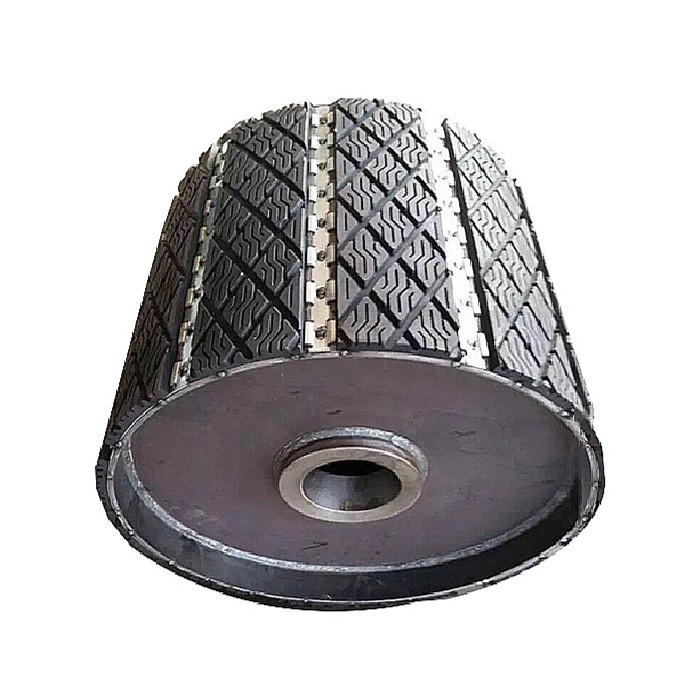
Rubber Lagging
Made from natural or synthetic rubber, it provides excellent grip and wear resistance, making it ideal for heavy-duty applications. It also offers some degree of cushioning to reduce the impact of the material on the belt.

Ceramic Lagging
Made from ceramic tiles or cylinders, it provides superior wear resistance, even in highly abrasive environments. It is often used in mining and quarrying applications.

Diamond Lagging
It features diamond-shaped grooves that offer excellent grip and are ideal for wet or slippery conditions.
Advantages of Pulley Lagging Rubber Sheet
Increased Traction
Pulley-lagging rubber sheets are specifically designed to augment the grip between the conveyor belt and the pulley. With improved traction, the chances of belt slippage significantly decrease. Belt slippage can often be a precursor to accelerated wear, inefficiencies, and operational hiccups. By reducing this slippage, the system operates more consistently and safely.
Protection against Wear
The rubber sheet serves as a shield, ensuring that there's a layer of protection between the pulley and the conveyor belt. This protective measure results in diminished wear on both the pulley and the belt. Consequently, both components enjoy an extended operational life, which translates to fewer replacements and less downtime.
Reduction in Maintenance Costs
Wear and tear is a primary cause of frequent maintenance. By mitigating this wear, pulley-lagging rubber sheets inherently reduce the need for regular maintenance. Less maintenance translates directly to cost savings. This not only includes the tangible costs of repairs and replacements but also the intangible costs associated with operational downtime.
Improved Efficiency
An efficient conveyor system is one that operates without disruptions and at its optimal capacity. As pulley-lagging rubber sheets enhance traction and minimize slippage, the conveyor system can transport materials more swiftly and without any unwarranted stoppages. This boost in efficiency ensures that operations run smoothly, leading to better productivity and output.
Safety Enhancement
One of the crucial benefits of pulley-lagging rubber sheets is the enhancement of safety. Slippage within conveyor systems can lead to potential accidents, harming equipment and workers. By implementing the right pulley-lagging rubber sheets, such risks are significantly reduced. As a result, operations can maintain a safer and more reliable working environment.
Applications of Pulley Lagging Rubber Sheet
Mining: Ideal for conveyors that transport coal, ore, and minerals, where high friction is required to prevent belt slippage.
Cement and Aggregate Plants: Helps in handling raw materials like cement, aggregates, and stone.
Power Plants:
Ensures smooth and efficient operation of conveyor systems in coal-fired and biomass power plants.
Material Handling:
Commonly used in industries involved in the movement of bulk materials.
Ports and Terminals:
Ideal for use in conveyors that handle large quantities of cargo, including grains, fertilizers, and other bulk goods.
Recycling Plants:
Improves the performance of conveyor systems used in sorting and processing recyclable materials.
Installation Steps of Pulley Lagging Rubber Sheet
Preparation
Begin by ensuring that the pulley surface is clean, dry, and free of any contaminants, such as grease or debris. Clean the surface thoroughly using an appropriate solvent or cleaning agent to promote proper adhesion.
Selection of Lagging Material
Choose the appropriate type of pulley lagging material based on the specific requirements of your application, considering factors such as operating conditions, belt type, and environmental considerations.
Cutting and Shaping
Measure the dimensions of the pulley surface and cut the lagging material to size, allowing for a slight overlap to ensure complete coverage. Use a sharp knife or cutting tool to achieve precise cuts, taking care to maintain uniformity.
Application of Adhesive
Apply a suitable adhesive or bonding agent to both the pulley surface and the backside of the lagging material. Follow the manufacturer's instructions regarding application techniques, coverage, and curing times to ensure proper adhesion.
Placement and Pressing
Carefully position the lagging material onto the pulley surface, aligning it correctly to ensure uniform coverage. Use a roller or hand pressure to firmly press the lagging into place, eliminating any air bubbles or wrinkles for a smooth, secure bond.
Curing and Setting
Allow sufficient time for the adhesive to cure and the bond to set according to the manufacturer's recommendations. Avoid subjecting the newly installed pulley lagging to excessive stress or load during the curing period to prevent premature failure.
How to Place an Order?
You can contact our sales person for an order, Please provide the details of your requirements as clear aspossible. So we can send you the offer at the first time.For designing or further discussion, it is better leave us your withSkype, TradeManger, Wechat, WhatsApp or other instant ways, in case of any delays.
Packaging and Shipping
|
Packaging |
Standard plywooden box with pallet |
|
Shipping |
Shipping by sea, by air, by express are acceptable. According to your requirements. |
Our Factory
Founded in 2018, Shanxi YiQi has been deeply engaged in the bulk material handling industry for many years. As a professional manufacturer and supplier, the company is committed to providing high-quality conveyor components and comprehensive solutions tailored to the needs of customers across various industries.

FAQ
We're professional pulley lagging rubber sheet manufacturers and suppliers in China, specialized in providing high quality customized service. We warmly welcome you to buy cheap pulley lagging rubber sheet for sale here from our factory. Contact us for quotation.
Welded Slide Lagging Sheet, diamond groove pulley lagging, conveyor slide lagging