


Product Description
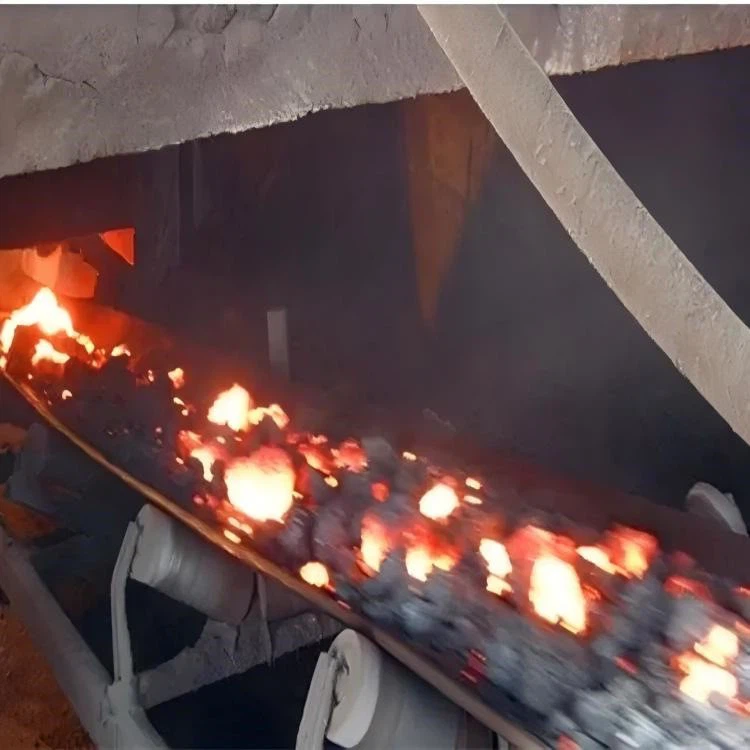
Heat Resistant Conveyor Belt adopts either an SBR or EPDM belt layer – a special high temperature resistant canvas as the carcass material -solving the issue of fabric shrinkage and deformation problems under high temperature environments, but also crucially avoiding the the problem rubber saturation and poor adhesion.

Features
- The heat resistance conveyor belt's specification shall be identical with that of the conventional conveyor belt.
- Carcass can be made from Polyester EP,Cotton CC, and Polyester Cotton TC with high strengthand low shrinkage features.
- Both top and bottom rubber coversare thick and heathigh temperature resistant.
Product Varieties
1. Heat Resistant Type:
T1: Working temperature is no more than 100℃, short-term peak temperature at 125℃.
T2: Working temperature is no more than 125℃, short-term peak temperature at 150℃.
T3: Working temperature is no more than 150℃, short-term peak temperature at 175℃.
2. High Temperature Resistant Type:
T4: Working temperature is no more than 175℃, short-term peak temperature at 230℃.
How to Order
1. Choose the right type of heat resistant belt based on the properties of conveyed materials, such astemperature, shape, and viscosity.
2. Surface working temperature of the belt has a huge impact on the belt service life and the adhesion strength between cover & ply and ply & ply. Therefore, investigate the surface working temperature andother relevant working conditions carefully before choosing the belt type.
Note
1. Prevent the belt from contacting with oil. Even a small amount of oil in the coolantsand conveyed materials will significantly damage the belt.
2. Should take auxiliary measures to cool the surface of the belt on the return route.
3. Keep the materials distributing evenly on the belt. lf the equipment unexpected stops during normal operation, take immediate measures to remove the materials on the belt.
4. Suggest hot vulcanized belt splicing for heat resistant conveyor belt.
Application
- Used in industries where material carried is high temperature, fire prevalent between 70-400 degrees applicable to conveying of the coke, cement, clinker and hot casting etc.
- Coal mining, cement, metal powder, sintered ore.
Heat Resistance Conveyor Belt physical property of the cover rubber
|
Item |
Belt type |
||||
|
T1 |
T2 |
T3 |
T4 |
||
|
Test Temperature |
|||||
|
≤100℃ |
≤125℃ |
≤150℃ |
≤180℃ |
||
|
Allowable Range |
|||||
|
Hardness |
Difference before and after ageing |
+20 |
+20 |
+20 |
±20 |
|
Max. Value after ageing |
85 |
85 |
85 |
85 |
|
|
Tensile strength |
variable rate in performance |
-25 |
-30 |
-40 |
-40 |
|
Min. value after ageing Mpa |
12 |
10 |
5 |
5 |
|
|
Rate of elongation at break |
variable rate in performance % |
-50 |
-50 |
-55 |
-55 |
|
Min. value after ageing % |
200 |
200 |
180 |
180 |
|
|
Heat Resistant Conveyor Belt |
|||
|
Materials Carried |
Size |
Temperature Of Materials Carried |
Belt Surface Temperature |
|
Coke |
100-200mm (4-8 inch) |
70–100°C |
50–60°C |
|
Cement |
Power |
200–250°C |
80–90°C |
|
Clinker |
10–30mm |
100–200°C |
100–110°C |
|
Molding |
– |
200–250°C |
80–90°C |
|
Metal Powder |
– |
170°C |
120–130°C |
|
Raw Material |
(30mm (1.2 inch)) |
180–220°C |
100–120°C |
|
Sintered Ore |
25–200mm (1-8 inch) |
200–400°C |
130–150°C |
|
Return Of Sintered Ore |
(10mm (0.4 inch)) |
260°C |
180–200°C |
Packing

Hot Tags: heat resistant conveyor belt, China heat resistant conveyor belt manufacturers, suppliers, ST Conveyor Belt, Cold Resistant Conveyor Belt, oil resistant belt, NN Conveyor Belt, steel cord conveyor belt, cross-rigid belt


