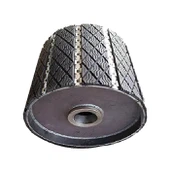
In conveyor systems, pulleys play a crucial role in driving and guiding the belt. The difference between lagged and non-lagged pulleys has a major impact on traction, maintenance, and service life. Understanding these types helps operators choose the right pulley for their applications.
1. What Are Lagged and Non-Lagged Pulleys?
A lagged pulley has a coating of rubber, ceramic, or polyurethane on its surface to improve traction and reduce slippage. Non-lagged pulleys, or plain steel pulleys, have no covering and rely on metal-to-belt friction. They are suitable for light-duty use or dry conditions.
2. Common Lagging Materials and Their Functions
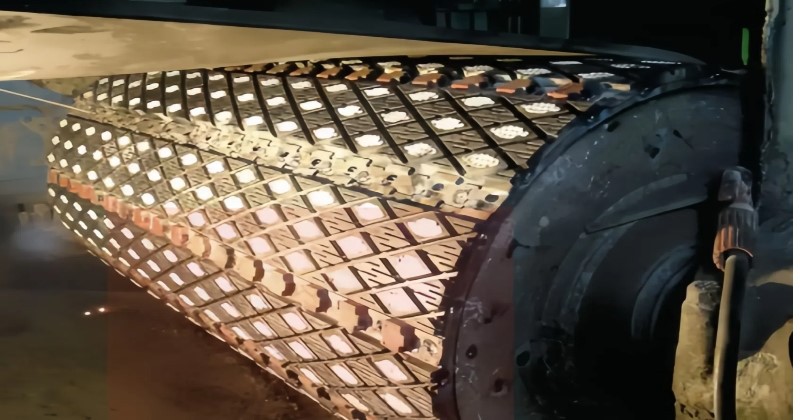
Rubber lagging offers cost-effective traction and flexibility. Ceramic lagging delivers high grip and wear resistance, ideal for heavy-duty mining. Polyurethane (PU) lagging resists oil and chemicals, making it suitable for fertilizer or food processing environments.

3. Key Differences Between Lagged and Non-Lagged Pulleys
Lagged pulleys improve traction, reduce belt slippage, and extend component life, while non-lagged pulleys are simpler and more economical. Lagged designs are essential in wet, dusty, or high-load systems, while non-lagged pulleys work well in return or low-tension applications.
4. Benefits of Using Lagged Pulleys
✅ Better traction between pulley and belt.
✅ Reduced slippage and downtime.
✅ Lower belt wear and longer service life.
✅ Protection against corrosion and vibration.
✅ Quieter and more efficient operation.

5. When to Use Non-Lagged Pulleys
Non-lagged pulleys are used for cost-sensitive projects, light-load systems, or as return pulleys. They are easy to maintain but may not provide enough grip in demanding environments. For critical drive pulleys, lagging is strongly recommended.
6. Application Scenarios
YiQi Conveyor produces both lagged and non-lagged pulleys for industries such as mining, cement, fertilizer, power generation, and ports. Ceramic lagging is ideal for mining, rubber for general industry, and PU for chemical applications.
7. Selecting the Right Pulley Type
Selection depends on belt speed, load weight, material properties, and environmental conditions. YiQi Conveyor's engineers help customers choose the optimal lagging thickness, bonding method (CN, cold, or slide-lag), and pulley diameter for maximum performance.

8. YiQi Conveyor Lagged Pulley Advantages
YiQi Conveyor offers:
- Customizable lagging options (rubber, ceramic, PU)
- CNC precision machining for balance and alignment
- Strong CN bonding process for durability
- Epoxy or zinc coating for corrosion resistance
- Proven reliability across global operations
9. Case Study: Vietnam Mining Project
In a Vietnam mining site, a client replaced smooth steel drive pulleys with ceramic slide-lag models from YiQi Conveyor. The result: belt slippage dropped by 90%, and maintenance intervals doubled - proving the value of quality lagging solutions.
Conclusion
Lagged pulleys improve traction, protect belts, and enhance system performance, while non-lagged pulleys offer cost savings for light-duty use. YiQi Conveyor continues to innovate in pulley engineering, providing dependable solutions for every industrial need.