

Conveyor Roller Runout: Why It Matters and How to Control It
A practical guide to understanding roller runout, what causes it, and when tighter runout control is really necessary.
What Is Conveyor Roller Runout?
When buyers compare conveyor rollers, they usually look at diameter, tube thickness, bearing brand, shaft size and price.
One detail is often overlooked: roller runout.
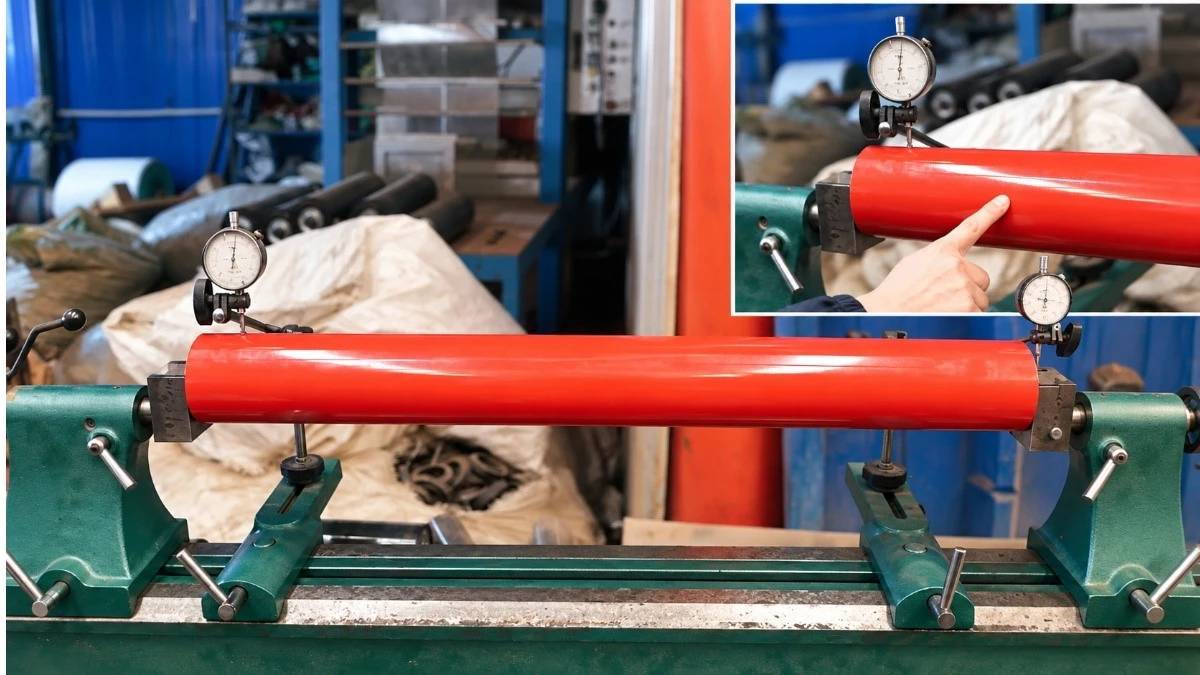
Runout sounds technical, but the idea is simple. When a conveyor roller rotates, its outer surface should stay as even as possible. If the tube is slightly out of round, or the shaft and bearing seats are not well aligned, the roller surface may move slightly up and down during rotation.
Why Does Roller Runout Matter?
A conveyor belt runs across many rollers at the same time. If one roller has excessive runout, the belt may feel a small repeated bump every time the roller turns.
Excessive runout can contribute to:
- Belt vibration
- Uneven belt contact
- Additional noise
- Faster roller wear
- Higher bearing stress
- Poorer belt tracking in some applications
One roller may not create a serious problem, but if many rollers have the same issue, the effect becomes much more noticeable.
This is why runout becomes more important on faster conveyors, longer systems, or projects where smooth belt support is a priority.
What Causes Excessive Runout?
1. The Tube Is Not Round Enough
Steel tube is the main body of most conveyor rollers. Commercial tube always has some dimensional tolerance.
If the tube is slightly oval or the outside diameter changes along its length, the finished roller may not rotate evenly.
This is why choosing a thicker tube does not automatically guarantee better runout. The quality and roundness of the tube itself also matter.
2. Bearing Seats Are Not Well Aligned
The bearing housings at both ends of the roller need to stay on the same center line. If one side is slightly off-center, the roller may look normal while stationary but show noticeable movement once it rotates.
3. The Shaft Is Not Straight
A bent or poorly machined shaft can also influence final runout. Even a small deviation may become more obvious on longer rollers.
4. Welding Can Cause Deformation
Welding introduces heat, and heat can slightly change the shape of the tube. For standard rollers this may still be acceptable, but tighter runout requirements need more careful production control.
Why We Sometimes Machine the Tube Outside Diameter
In some projects, the customer requires tighter runout than a standard commercial tube can reliably provide.
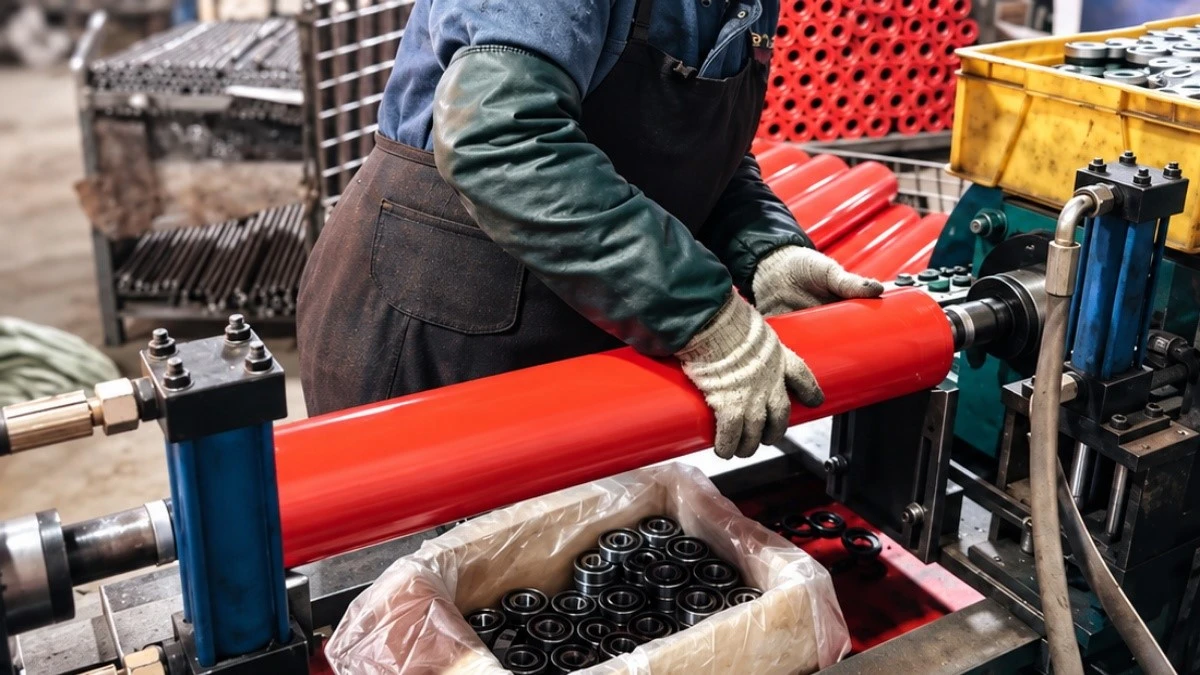
In that case, one practical solution is to machine the outside diameter of the roller tube.
We recently handled a project using Q355B roller tubes in sizes around:
Because this material and size combination is not commonly used for standard rollers, the available tube tolerance was not ideal for tighter runout control.
To improve the final result, the outside diameter needed additional machining.
This is not a production mistake. For customized rollers, the nominal tube thickness and final machined wall thickness may not be exactly the same.
This kind of machining is more relevant for customized steel conveyor rollers where the customer has a specific runout requirement.
What Runout Is Considered Acceptable?
There is no single runout value suitable for every conveyor.
The correct requirement depends on:
- Roller diameter
- Roller length
- Belt speed
- Conveyor duty
- Customer standard
- Actual application conditions
| Runout Requirement | Typical Situation |
|---|---|
| Standard Production Tolerance | Normal industrial conveyor applications |
| ≤ 0.5 mm | Projects requiring tighter rotation control |
| ≤ 0.3 mm | More demanding applications or customer-specific requirements |
The important point is not to request the smallest number possible.
Tighter tolerances normally mean more machining, more inspection and higher production cost. The better question is:
How Can Runout Be Controlled?
Good runout control starts before the final inspection.
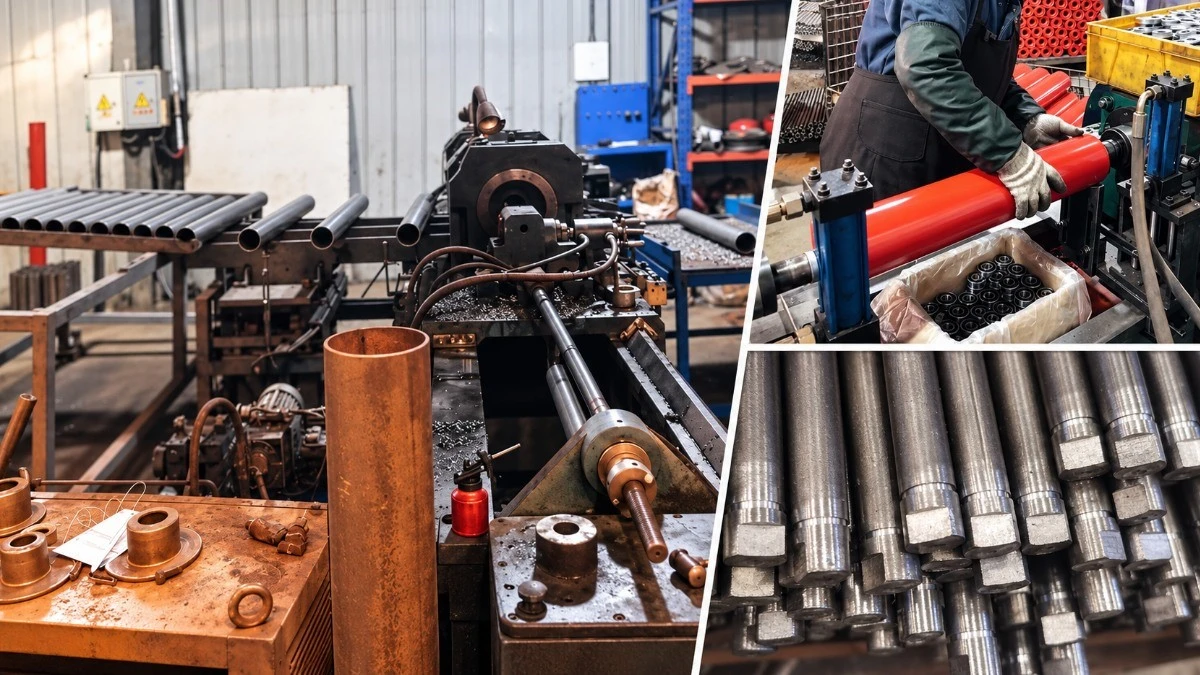
- Select suitable steel tube
- Check tube straightness and roundness
- Machine the tube when required
- Keep bearing seats concentric
- Control welding deformation
- Use a straight, accurately machined shaft
- Check the finished roller during rotation
For customized projects, it is better to confirm the runout requirement before production rather than after the rollers are finished.
Runout Is Only One Part of Roller Quality
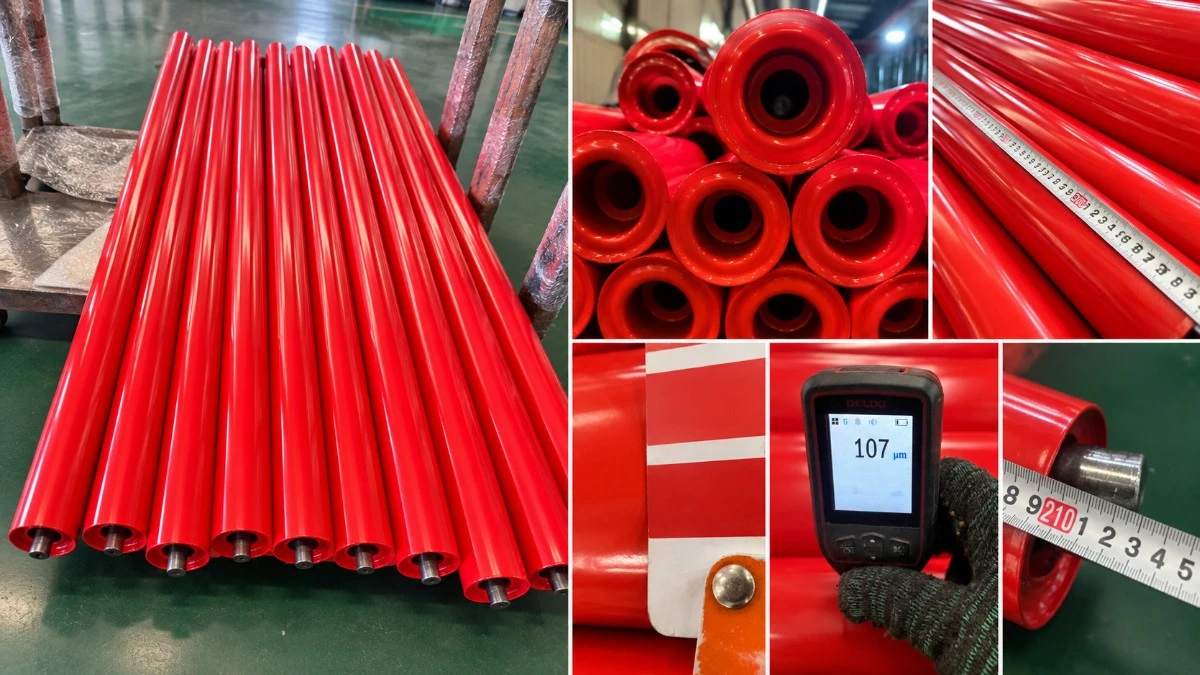
Runout is important, but it should not be the only way to judge a conveyor roller.
A reliable roller also depends on:
- Bearing quality
- Seal design
- Shaft strength
- Tube material
- Welding quality
- Rotation resistance
- Surface protection
A roller with very good runout but poor sealing may still fail early in a dusty or wet environment. Likewise, a slow-moving heavy-duty conveyor may not need an extremely tight runout tolerance.
The goal is always to match the roller design to the actual working conditions.
What Should Buyers Confirm Before Ordering?
If runout matters for your project, include it directly in the inquiry.
Roller diameter: Ø152 mm
Face length: 600 mm
Tube material: Q355B
Tube wall thickness: 4 mm nominal
Required runout: ≤ 0.5 mm
This gives the supplier a much clearer production target. If the tolerance is tight, the supplier can confirm in advance whether additional machining or inspection is needed.
Conclusion
Conveyor roller runout is not the most visible specification on a drawing, but it can influence how smoothly the conveyor operates.
The main causes usually come from tube roundness, shaft accuracy, bearing seat alignment and welding deformation.
For standard conveyors, normal production tolerances are often enough. For faster or more demanding systems, tighter runout may require additional machining and inspection.
The key is not to specify the smallest possible number. It is to choose a realistic runout requirement that matches the actual working conditions.
For customized conveyor rollers, especially projects involving special tube materials, diameters or tighter tolerances, confirming the runout requirement early can avoid unnecessary changes later.
Customers can also learn more about our steel conveyor rollers and conveyor system components for different bulk material handling applications.
Need Customized Conveyor Rollers?
Send us your roller diameter, face length, tube material, shaft dimensions, bearing requirement and runout tolerance. YIQI Conveyor can review the roller design according to your actual conveyor conditions.
Request a Quote


