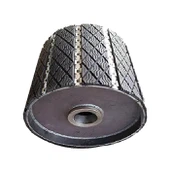
In modern industrial production and daily life, dust covers, as an important protective equipment, play a key role in protecting equipment, extending service life and maintaining a clean production environment. There are many types of dust covers, and different types of dust covers are designed for different use environments and needs.
According to material classification, dust covers are mainly made of rubber, silicone, plastic and stainless steel. Rubber and silicone dust covers are often used in places where they need to fit closely to the surface of the equipment, such as precision instruments and electronic equipment, due to their good elasticity and sealing performance. Plastic dust covers are widely used in outdoor equipment and general industrial environments due to their lightness and corrosion resistance. Stainless steel dust covers are often used in heavy industry and high temperature environments due to their ruggedness and durability.
From a functional perspective, dust covers can be divided into fixed and adjustable types. Fixed dust covers are simple in design and fixed in position after installation. They are suitable for places with limited space or no frequent adjustment. Adjustable dust covers can be adjusted in size and position as needed, suitable for changing industrial environments, and can better adapt to equipment changes and maintenance needs.
In addition, there are dust covers designed for special environments, such as high temperature resistant dust covers and fireproof dust covers. These dust covers with special materials and designs can provide effective protection under extreme conditions to ensure the safety of equipment and personnel.
Choosing a suitable dust cover should not only consider its material and function, but also the actual use environment and needs. For example, for electronic components, the dust cover needs to have good anti-static performance to prevent static electricity from damaging the components; in the food processing industry, the dust cover must meet food grade safety standards to ensure food safety.
Understanding different types of dust covers and their applicable scenarios will help companies choose appropriate protective equipment according to specific needs, thereby improving production efficiency and reducing maintenance costs. In the future, with the advancement of technology and changes in industrial needs, the design and application of dust covers will continue to innovate and develop to provide more comprehensive protection for industrial production.